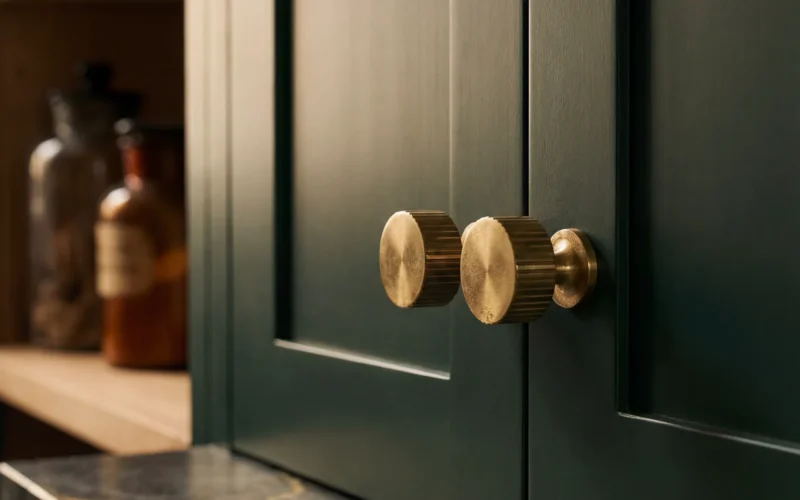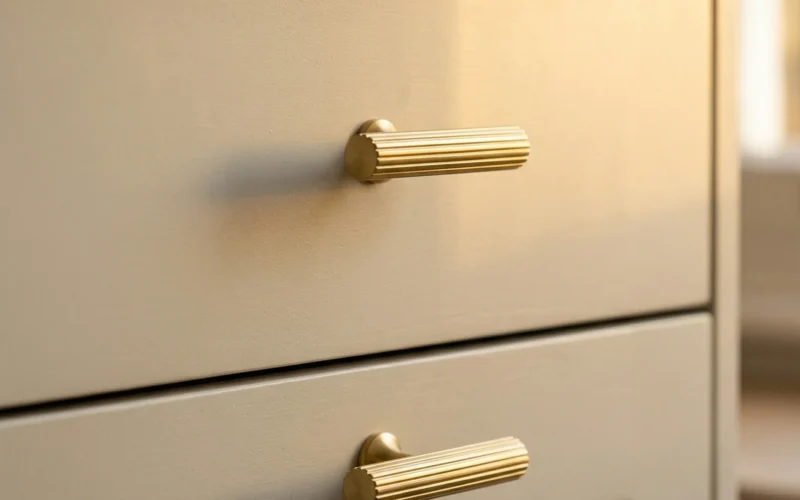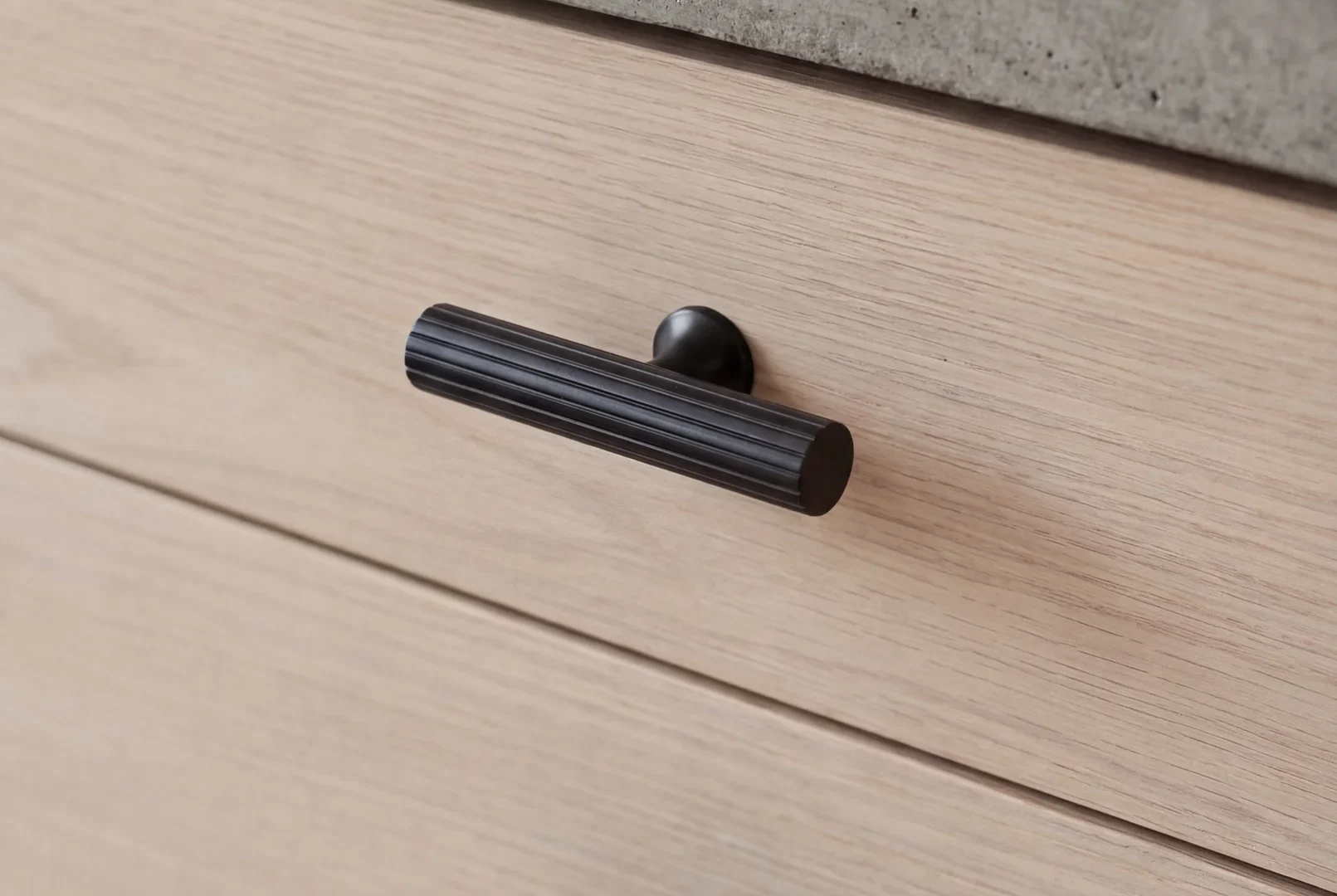
Most cabinet hardware sold today is made from zinc alloy. It is cast in moulds, plated with a thin layer of brass or nickel, and shipped in bulk. It looks the part when it arrives. It does not look the part two years later.
We made the decision early on to work exclusively with solid brass. Not brass-plated zinc. Not brass-coated steel. Solid brass, machined or cast from CZ121 or CW614N alloy, through and through.
The weight argument
Pick up a solid brass knob and a zinc equivalent side by side. The difference is immediate. Brass is denser, roughly 8.5 grams per cubic centimetre compared to zinc’s 7.1. That 20% difference in density translates directly into the feeling of quality when you open a drawer.
Weight is not just a nice-to-have. It affects how a handle feels in use, how a knob turns, and how a pull sits in your hand. These are objects you touch twenty, thirty, fifty times a day. The material matters.
The durability argument
Zinc alloy hardware is plated. The brass or nickel finish is a surface treatment, typically between 5 and 15 microns thick. When that plating wears through (and it will, especially on edges and high-contact surfaces), you see the grey zinc underneath. There is no fixing this without replating.
Solid brass wears differently. A scratch on a satin brass handle reveals more brass. The material is consistent all the way through. Scratches can be polished out or simply left to become part of the piece’s character.
The patina argument
Brass is a living material. It reacts with air, moisture, and the oils from your hands. Over time, it develops a patina that is unique to its environment. A kitchen handle ages differently from a bathroom handle. A frequently used drawer pull develops a polished track where fingers grip.
This aging process is only possible with solid brass. Plated hardware does not patina. It degrades. The plating breaks down unevenly, creating spots and patches rather than the gradual, even character that defines well-aged brass.
The sustainability argument
Brass is infinitely recyclable without loss of quality. A brass knob that reaches the end of its useful life (which, with solid brass, might be several decades) can be melted down and reformed into new brass. The material loses nothing in the process.
Plated zinc is harder to recycle because the plating must be separated from the base metal. In practice, most plated hardware ends up in landfill rather than being recycled.
The cost question
Solid brass costs more than zinc alloy. The raw material is more expensive, the machining takes longer, and the finishing process is more involved. A solid brass knob might cost three to five times more than its zinc equivalent.
But consider the timeline. A zinc knob that needs replacing after three years costs more per year of use than a brass knob that lasts twenty. And replacing hardware means not just the cost of new pieces but the time and hassle of fitting them, and the risk of damaging cabinet doors in the process.
We price our hardware to be accessible, not cheap. Every piece is an investment in something that will outlast the kitchen it is fitted in.