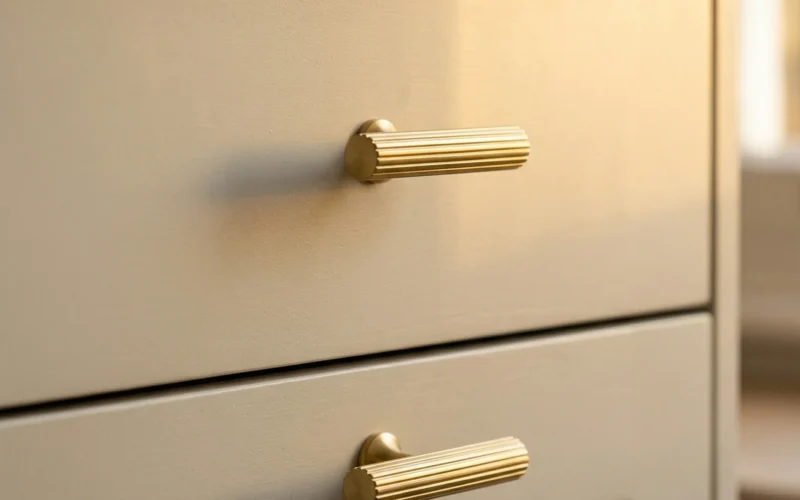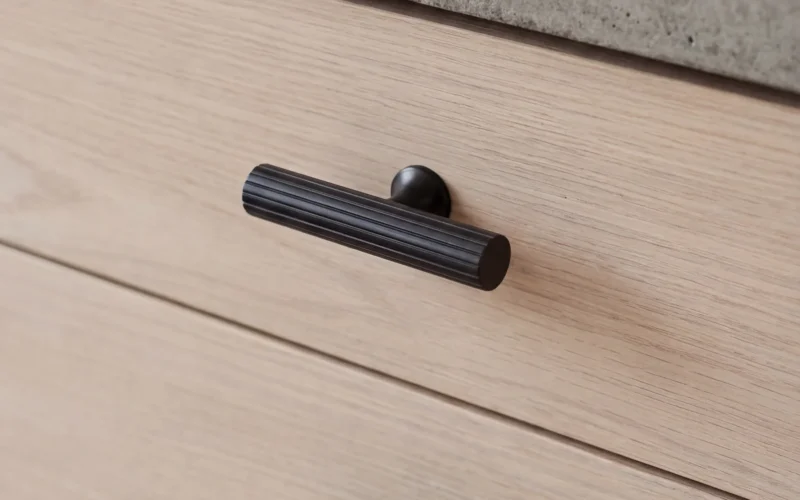
Not all brass hardware is actually brass. Much of what is sold as brass is zinc alloy with a thin brass plating, a surface treatment that wears through over time to reveal the dull grey metal beneath. Understanding the difference between solid brass and plated alternatives helps explain why the two feel, look, and age so differently.
Solid brass vs plated zinc
A solid brass knob is machined or cast from brass throughout. Cut it in half, and the material is the same all the way through. This matters for three reasons.
Weight. Solid brass has a density that zinc alloy cannot match. A Grafton knob weighs roughly 85 grams. A zinc alloy equivalent of the same size weighs around 45 grams. You feel this difference the moment you pick it up, and you feel it every time you open a drawer.
Durability. Because the finish is applied to solid brass, scratches and wear do not reveal a different material underneath. A satin brass knob that gets scratched is still brass beneath. A plated knob that gets scratched shows zinc.
Longevity. Brass does not rust. It does not corrode in normal domestic environments. A solid brass knob installed today will still be functional in fifty years. Many of the brass fittings in Georgian townhouses are still the originals.
How a brass knob is made
The process begins with a brass rod or billet, an alloy of copper and zinc in carefully controlled proportions. The ratio determines the colour and workability of the metal.
Machining
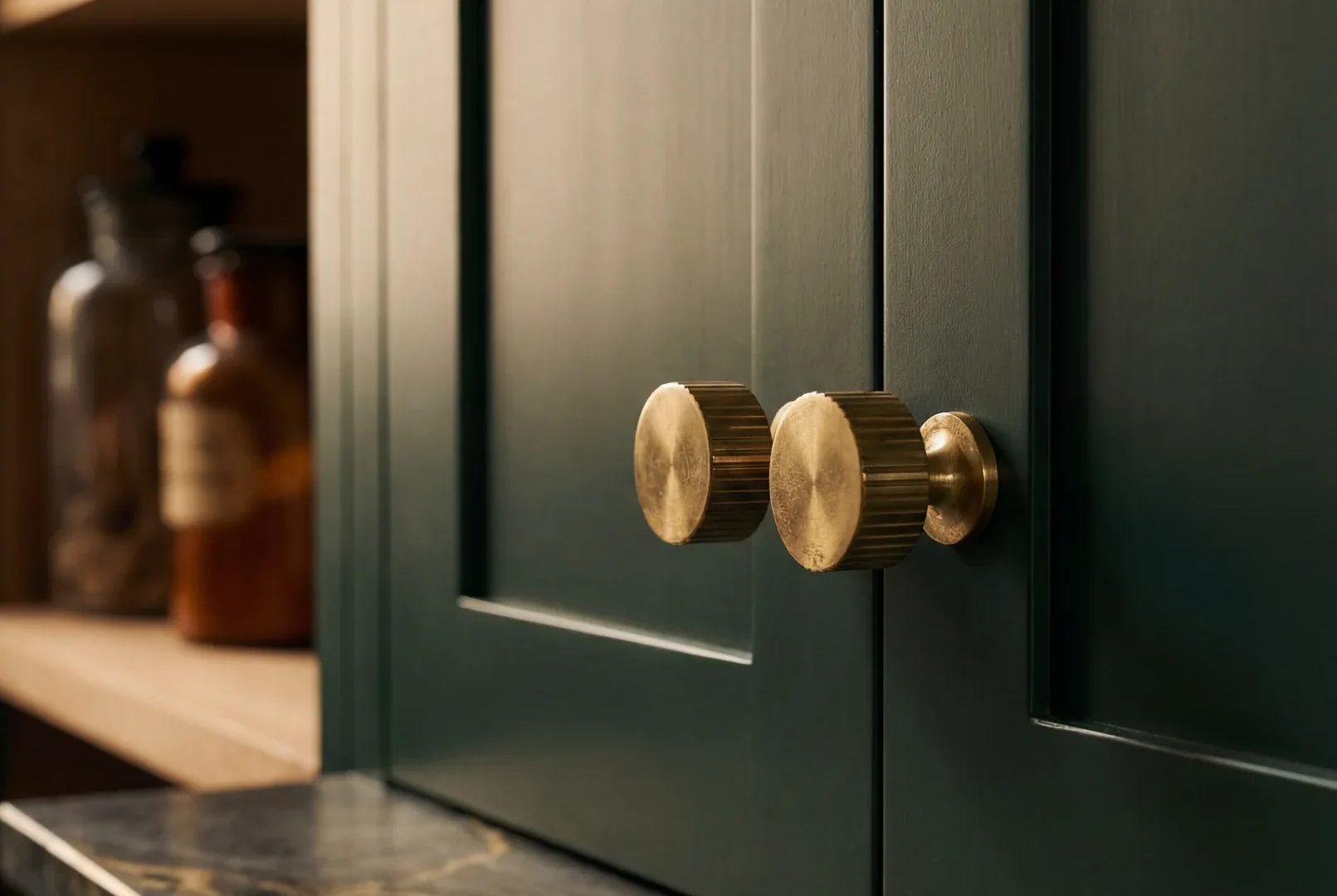
For designs with precise geometric details, like the fluting on the Grafton, the brass is turned on a CNC lathe. The machine follows a programmed path, cutting the profile and the reeding in a single operation. The precision is repeatable to fractions of a millimetre, which means every knob in a set is identical.
Finishing
After machining, the raw brass is polished to remove tool marks. Then the finish is applied. For satin brass, the surface is brushed in one direction to create fine, parallel lines that diffuse light. For antique brass, a chemical solution darkens the surface before it is sealed.
The finishing stage is where much of the character comes from. Two knobs with the same shape but different finishes can feel like entirely different products.
Quality control
Every piece is inspected for consistency. The thread must engage cleanly with the bolt. The base must sit flat against the cabinet face. The finish must be even, without pooling or bare spots. These are small details, but they are the difference between hardware that installs cleanly and hardware that frustrates.
Quality hardware is not something you admire. It is something you stop thinking about because it simply works, every time.
Why solid brass costs more
Raw brass is significantly more expensive than zinc alloy. The machining process is slower because brass is harder. The finishing requires more steps. And the quality control is more demanding because the expectations are higher.
The result is a product that costs more upfront but does not need replacing. In a kitchen that will be used for twenty years, the cost difference between solid brass and plated zinc becomes negligible. The quality difference does not.
How to tell the difference
If you are evaluating hardware and want to know whether it is solid brass:
- Weight: Hold it. Solid brass feels substantially heavier than plated alternatives
- Magnet test: Brass is not magnetic. If a magnet sticks, the base metal is steel or iron
- Price: Solid brass hardware typically starts around ten to fifteen pounds per piece. If a knob costs two or three pounds, it is almost certainly plated
- Sound: Tap it against a hard surface. Brass produces a clear, resonant tone. Zinc sounds flat and dull
None of these tests require expertise. They require attention, and a willingness to hold the product in your hand before committing.