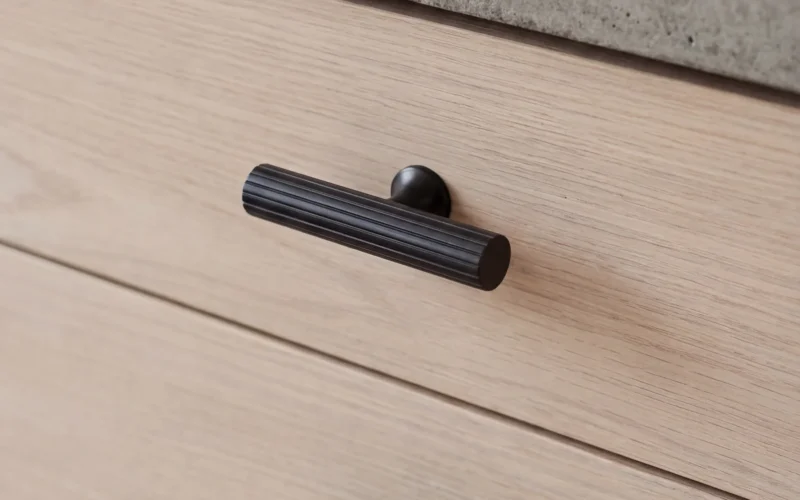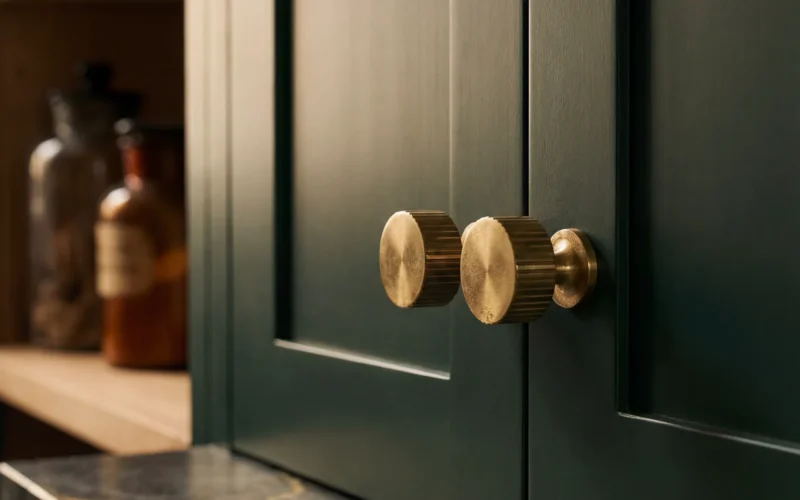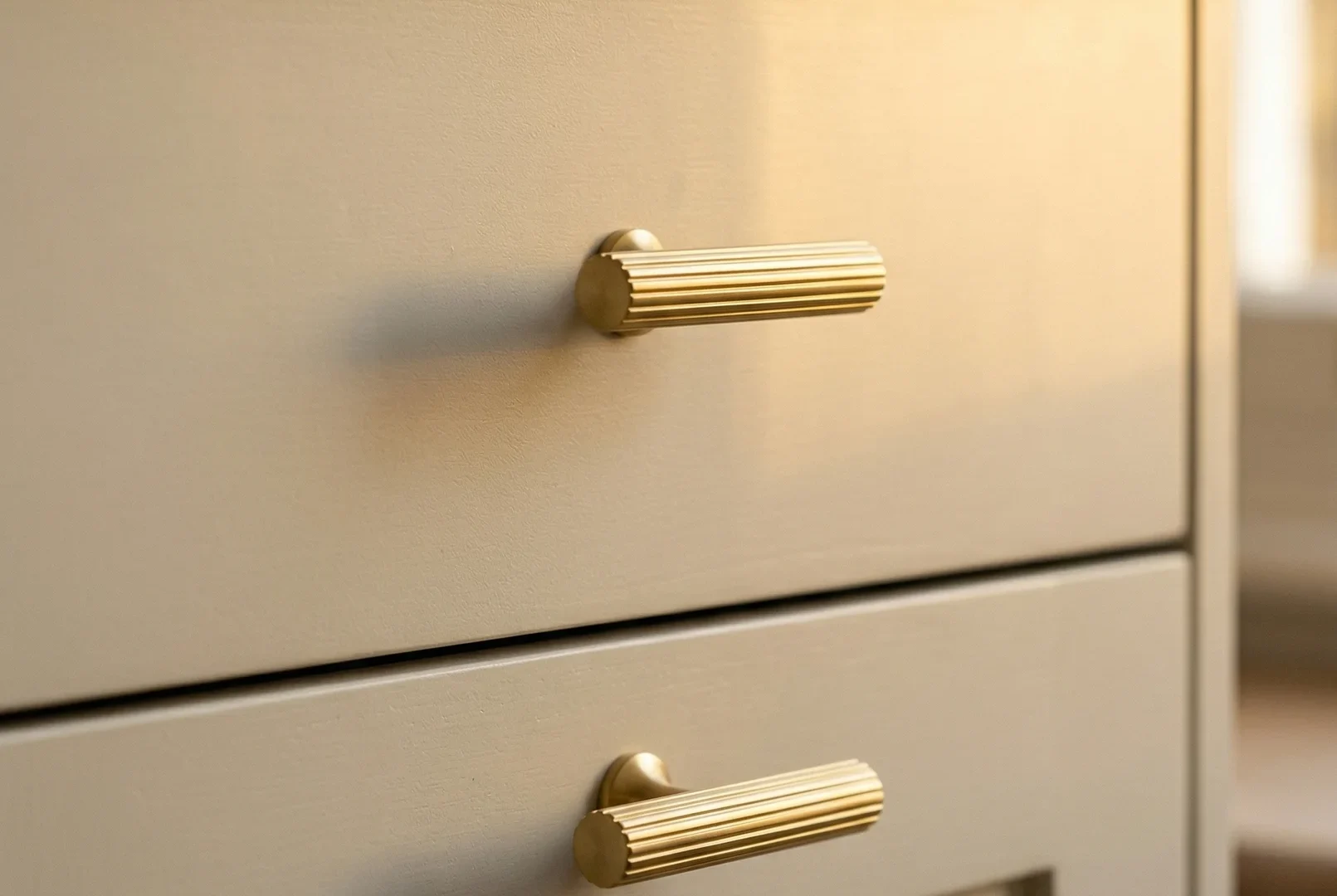
Every handle in the Arlowe collection started as a drawing. Some started as rough sketches on paper. Others began as precise CAD models. All of them went through the same development process before they were ready to sell.
Design and prototyping
The first step is always a physical prototype. CAD renderings are useful for proportions and dimensions, but you cannot feel a rendering. You cannot test how a handle sits in your hand, how it catches the light, or how it sounds against a cabinet door from a screen.
Our prototypes are CNC-machined from solid brass. This is expensive for a single piece, but it gives us a prototype that is functionally identical to the final product. We test these prototypes on real cabinets, in real kitchens, with real hands.
Refinement
The first prototype is rarely the last. Dimensions change. Radii get adjusted. A knurling pattern that looked right in CAD might feel too aggressive in the hand. A pull that seemed proportional at 160mm CC might look better at 128mm.
This stage takes longer than people expect. A single handle might go through four or five iterations before the proportions, weight, and feel are right. We are not trying to fill a catalogue. We are trying to get each piece exactly right.
Production tooling
Once a design is finalised, we create production tooling. For machined pieces like the Grafton, this means writing CNC programs that can reproduce the design consistently across thousands of units. For cast pieces, it means creating moulds.
The tooling stage is where precision matters most. Tolerances are set in fractions of a millimetre. The depth of a knurling cut, the radius of a corner, the bore of a screw hole. Every dimension is specified and verified.
Manufacturing
Our pieces are manufactured in specialist brass workshops. Each handle starts as a length of solid brass bar stock. The CNC lathe turns the bar to the correct profile, cuts details like fluting or knurling, and parts off the finished piece. A single knob takes between three and eight minutes to machine, depending on complexity.
After machining, each piece is deburred by hand to remove any sharp edges from the cutting process. This is a manual step that cannot be automated without risk of damaging the surface finish.
Finishing
The raw machined brass is then finished. Satin brass is achieved by brushing the surface in one direction with a fine abrasive. Antique brass involves a chemical patination that darkens the metal before a protective lacquer is applied. Matte black is a PVD (physical vapour deposition) coating that bonds to the brass at a molecular level.
Each finish requires different equipment, chemicals, and expertise. This is why we work with specialist finishers rather than trying to do everything in one facility.
Quality control and packing
Every piece is inspected before packing. We check dimensions, finish consistency, and function. Screws are tested for thread engagement. Pieces are weighed to confirm they are solid brass throughout.
The pieces are then packed individually with all necessary fixings and shipped to our warehouse. From there, they go to you. The entire process from brass bar to doorstep takes approximately three to four weeks.