Brass is having a moment, but it has always been there. Long before it became a design trend, brass was the material of choice for hardware in the finest homes. What has changed is the range of finishes available and the level of control we have over how it looks and how it ages.
This guide breaks down the most common brass finishes, explains how each one behaves over time, and helps you decide which is right for your project.
Lacquered vs unlacquered
This is the most important distinction. It determines whether your hardware will look the same in five years as it does today, or whether it will develop character.
Lacquered brass has a clear protective coating that prevents oxidation. The finish stays consistent. Satin brass, for example, maintains its soft golden tone indefinitely because the lacquer seals the surface from air and moisture.
Unlacquered brass has no coating. The bare metal reacts with the oils on your hands, with moisture, and with air. Over months and years, it develops a patina that is entirely unique to how it has been used. High-touch areas darken first. Edges may develop a greenish tone in humid environments.
Neither is better. They are different philosophies. Lacquered is for those who want reliability. Unlacquered is for those who want a material that tells a story.
Satin brass
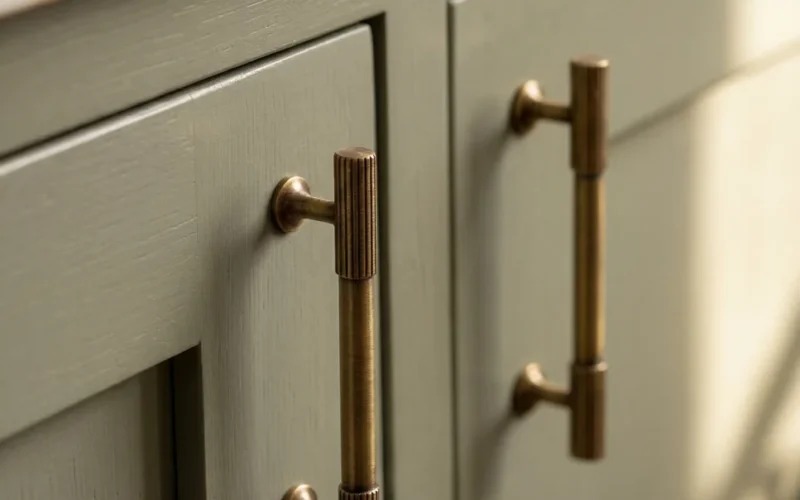
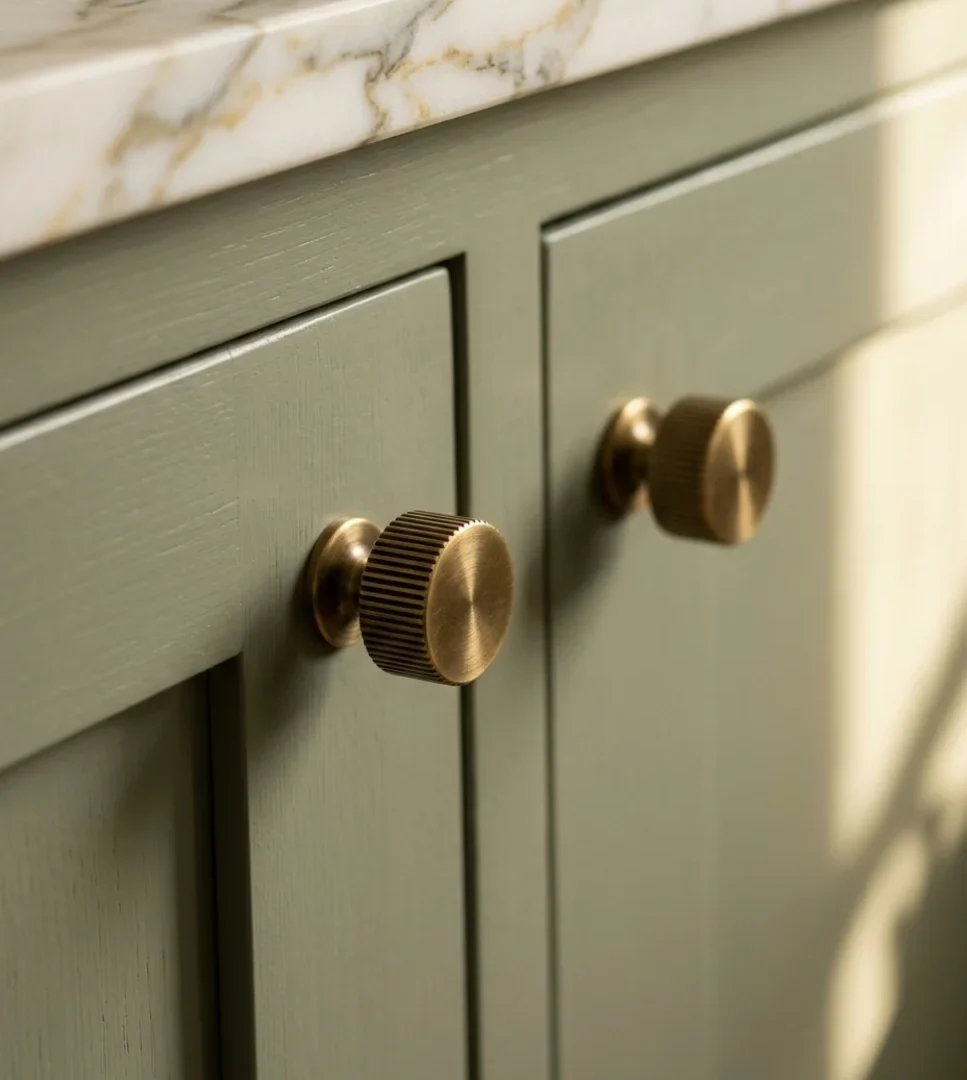
The most versatile of the brass finishes. Satin brass has a brushed surface that softens reflections, giving it warmth without glare. It pairs well with almost everything, from white marble to dark timber, from modern kitchens to period homes.
It is lacquered, which means the tone stays consistent over time. The brushed texture also has a practical benefit: it hides fingerprints and light scratches better than a polished surface.
Antique brass
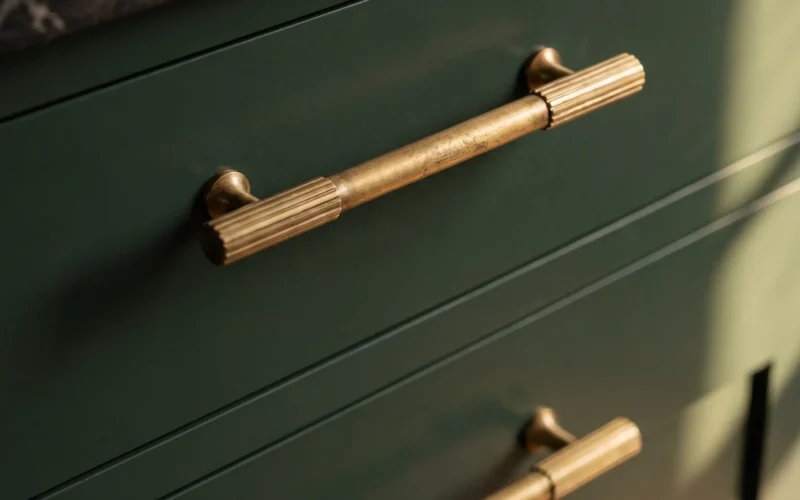
Darker and more complex than satin brass, antique brass carries depth. The finish is achieved through a chemical process that accelerates the patina, then sealed with an electroplated coating to preserve that aged character.
It works particularly well in period properties or alongside dark joinery. Against a deep green or navy kitchen, antique brass hardware creates a sense of heritage without feeling dated.
Unlacquered brass
The purist’s choice. Unlacquered brass starts bright and gradually darkens. The patina is not uniform. It develops first where the hardware is touched most frequently, creating a pattern of use that is unique to each home.
Some people find this beautiful. Others find it inconsistent. It is worth being honest with yourself about which camp you fall into before committing.
Unlacquered brass does not age badly. It ages honestly. Every mark is a record of a hand reaching for a drawer.
Matte black
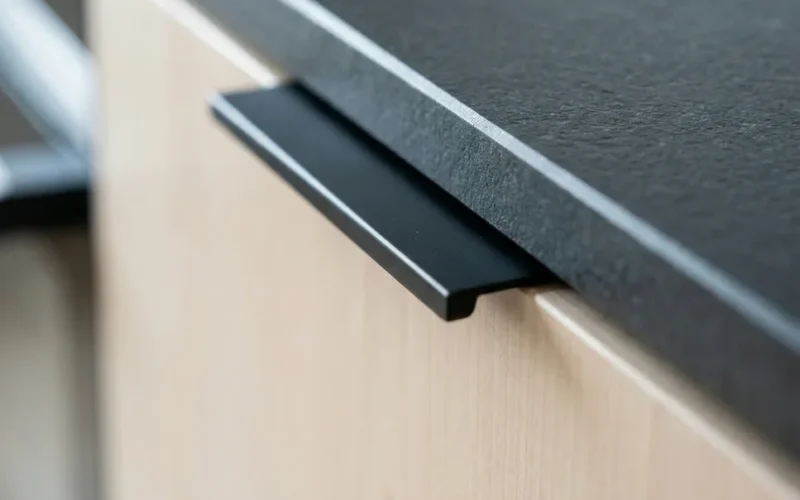
Not a brass finish in the traditional sense, but matte black hardware is often made from a brass base with an electroplated coating. The result is a finish that combines the weight and solidity of brass with a contemporary, graphic aesthetic.
Matte black works best in kitchens and bathrooms where contrast is the driving design principle. Against light cabinetry, it creates strong lines. Against dark joinery, it disappears into the surface, leaving only the shape.
Satin nickel
Cool-toned where brass is warm, satin nickel has a soft silver appearance that sits comfortably in modern and transitional interiors. The brushed surface resists fingerprints and the electroplated finish ensures longevity.
It pairs naturally with stainless steel appliances and chrome tapware, making it a safe but refined choice for kitchens where cohesion is the priority.
Caring for your finish
Regardless of finish, the care routine is simple:
- Wipe regularly with a soft, damp cloth
- Avoid abrasive cleaners and scouring pads
- For lacquered finishes, a mild soap solution is sufficient
- For unlacquered brass, embrace the patina or restore the shine with a brass polish
The key is consistency. A quick wipe after cleaning the kitchen keeps hardware looking its best with minimal effort.