Choosing cabinet hardware is one of the final decisions in a kitchen project, and one of the most visible. It is the detail you touch every day, the element that ties a room together or quietly undermines it.
This guide walks through the key decisions, from knob versus pull to finish pairing and spacing, so you can make a choice that feels right for years.
Knobs, pulls, or both
There is no universal rule. The choice between a knob and a pull depends on the cabinet, your hands, and the feeling you want to create.
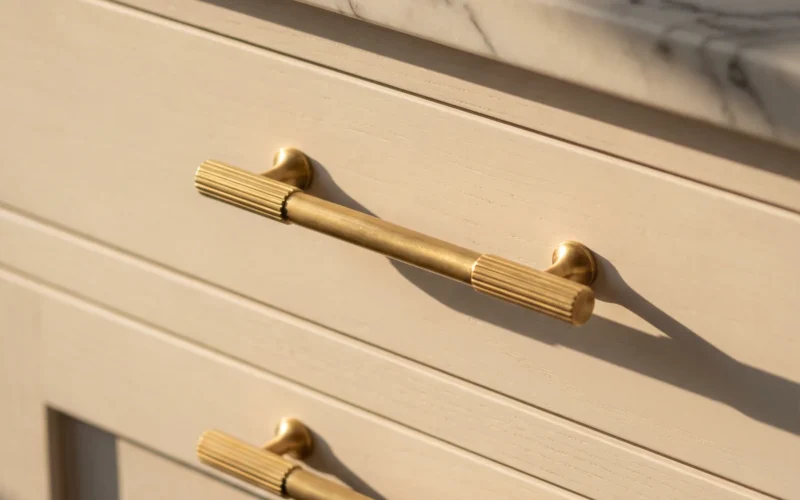
Knobs suit upper cabinets and small drawers. They are compact, unobtrusive, and work well on traditional cabinetry. A round or reeded knob in satin brass can elevate a simple Shaker door without overwhelming it.
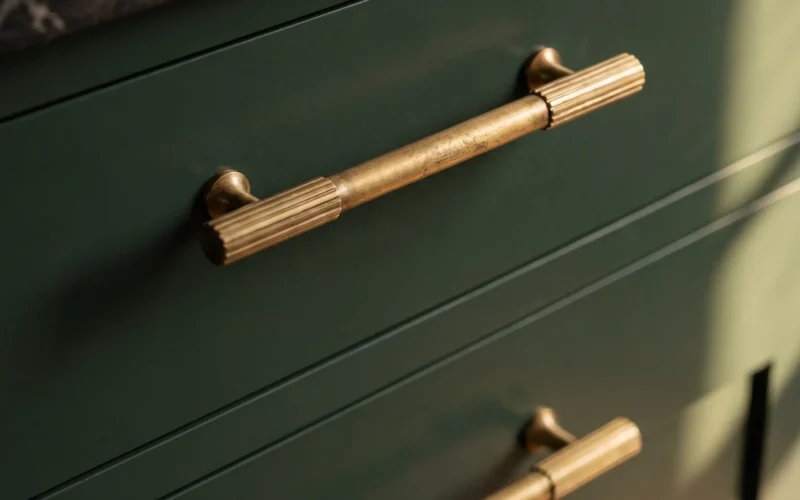
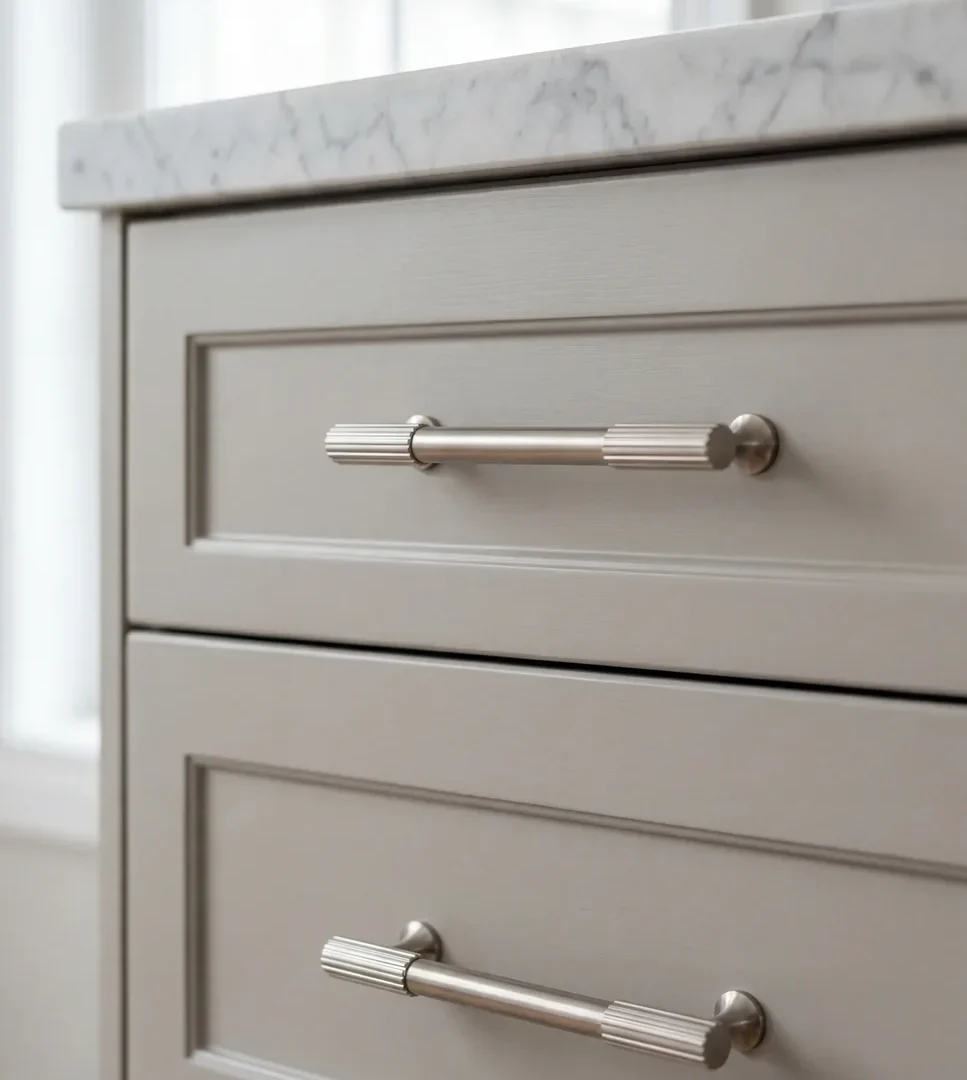
Pulls are the natural choice for lower cabinets and wide drawers. They provide a comfortable grip and create a strong horizontal line across the face of a kitchen. For drawers wider than 600mm, a pull is almost always more practical than a knob.
Mixing both is the approach most designers take. Knobs on doors, pulls on drawers. It creates visual variety while keeping each piece functionally suited to its position.
Choosing a finish
Finish is where personality enters. The same knob in satin brass feels entirely different in matte black.
Consider what else is in the room. Tap finish, light fittings, window hardware. You do not need everything to match exactly, but there should be a conversation between them. A satin brass knob works beautifully alongside antique brass pendants because they share warmth without being identical.
If you are drawn to something bolder, unlacquered brass develops a unique patina over time. It is a living finish that marks the passage of use and suits kitchens where character is more important than uniformity.
Size and proportion
Hardware should feel proportional to the door or drawer it sits on. A 32mm knob that looks elegant on a 400mm door will feel lost on a 700mm pantry panel.
For pulls, centre-to-centre measurement matters. A 128mm pull suits standard drawers. For wider faces, step up to 192mm or 256mm. The pull should never look cramped or stretched against the cabinet face.
Placement guidelines
- Upper cabinet knobs: centred horizontally, 25 to 40mm from the bottom corner
- Lower cabinet knobs: centred horizontally, 25 to 40mm from the top corner
- Drawer pulls: centred both horizontally and vertically
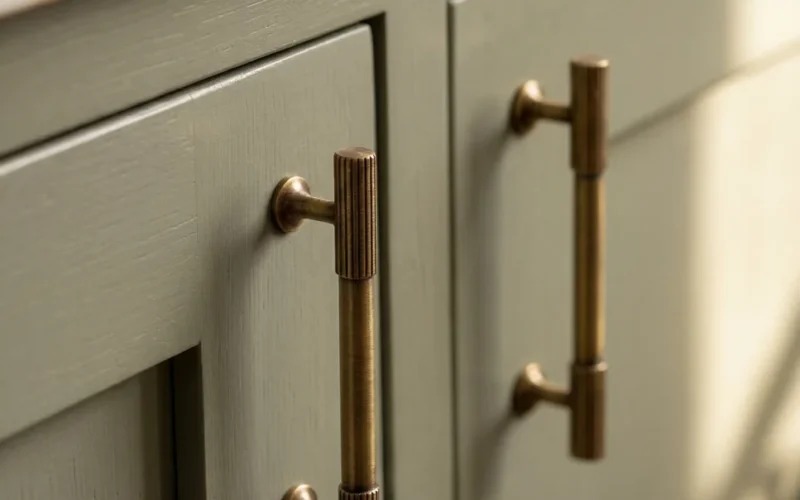
- Tall pantry doors: place the pull at the natural hand height, roughly 900 to 1000mm from the floor
A note on consistency
The strongest kitchens commit to a single finish family. This does not mean every piece must be identical, but keeping to satin brass throughout, or matte black throughout, creates coherence.
Where you can introduce variety is in the shape. A reeded knob on doors with a matching reeded pull on drawers shares a design language without being monotonous.
The best hardware decisions are the ones you stop noticing. They feel inevitable, as though the kitchen would not work any other way.
Order samples first
Screens cannot replicate the warmth of real brass or the weight of a solid knob in your hand. We always recommend ordering finish samples before committing, especially if you are choosing between two finishes that photograph similarly.
Hold the sample against your cabinet door, your worktop, your tile. Live with it for a day. The right choice tends to become obvious when you see it in context.