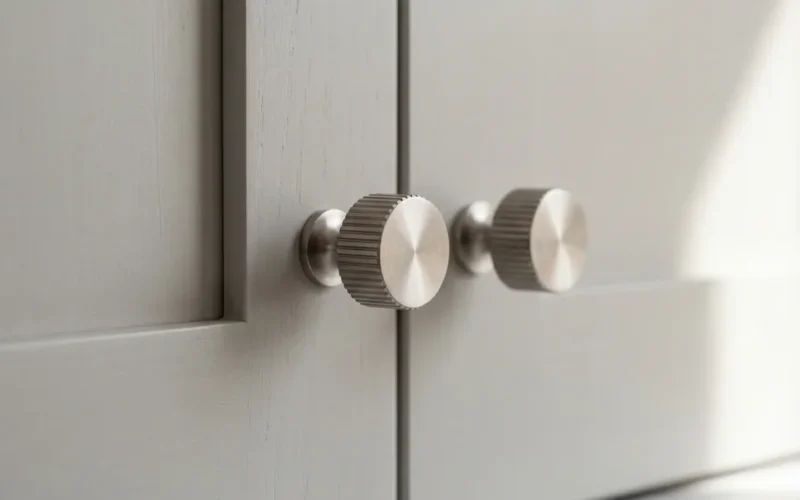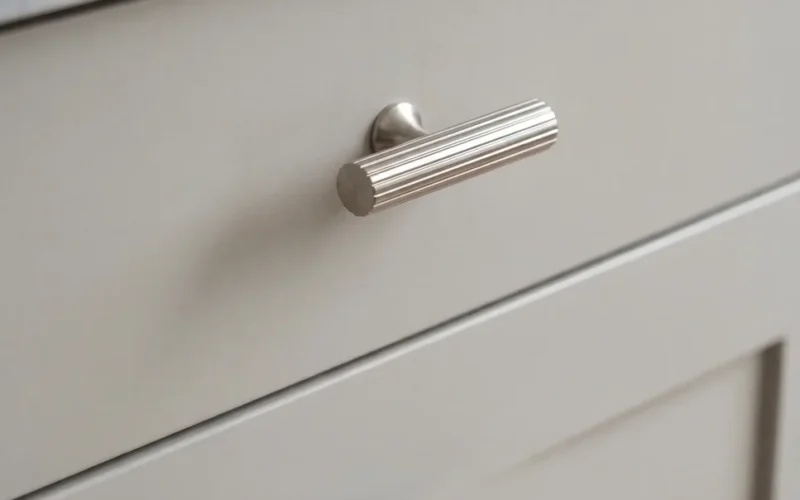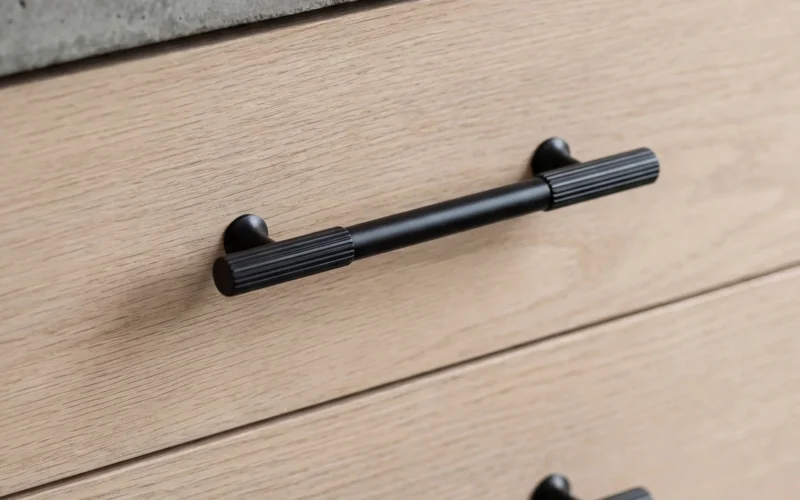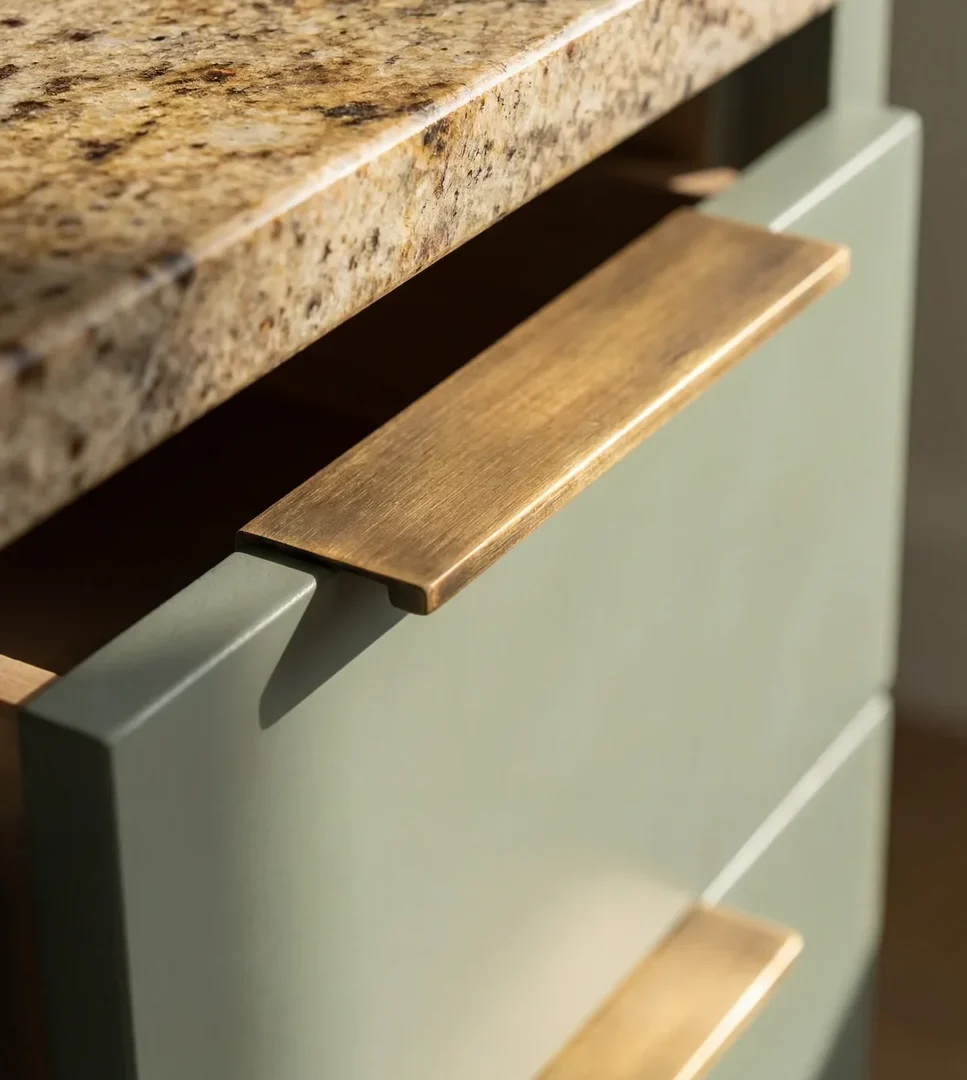
The old rule was simple: match everything. Brass taps, brass handles, brass light switches. The kitchen was a single-metal environment and anything else was a mistake.
That rule is worth questioning. The most interesting kitchens today mix two or sometimes three metals. But they do it with intention, not by accident. Here is how to get it right.
Start with a dominant metal
Choose one metal for the majority of your hardware. This is the finish that sets the tone. If you want warmth, start with brass. If you want a cooler palette, start with nickel or chrome. If you want contrast, start with matte black.
Your dominant metal should appear on the pieces you touch most: cabinet handles, drawer pulls, and the tap. These are the elements that define the kitchen’s character.
Add a secondary metal with purpose
The secondary metal should appear in smaller doses and in a different category. If your handles are brass, your pendant lights might be nickel. If your pulls are matte black, your shelf brackets might be brass.
The key is separation by function. Handles in one finish, lighting in another, accessories in a third. When two different metals appear on the same category of object (two different finishes of handle on the same run of cabinets, for example), it reads as indecision rather than design.
Consider undertones
Not all metals clash. Warm metals (brass, gold, copper) mix well with each other because they share yellow and red undertones. Cool metals (nickel, chrome, stainless steel) share silver undertones and sit comfortably together.
The tension comes when you mix warm and cool. This can work brilliantly, but it needs a bridge. A matte black element often serves as this bridge because black is neutral and sits between warm and cool without competing.
Three combinations that work
Satin brass handles with brushed nickel taps. The warmth of brass on the cabinets against the cooler nickel at the sink. This works because the satin finishes share the same muted quality even though the colours differ.
Matte black handles with antique brass accents. Black hardware on the cabinets with brass shelf brackets, picture lights, or a brass tap. The black recedes and the brass becomes a feature.
Unlacquered brass handles with stainless steel appliances. The living, aging quality of unlacquered brass against the precision of stainless steel. This contrast tells a story about craft meeting function.
What to avoid
Avoid using more than three metals in a single space. Two is comfortable. Three is interesting. Four is chaos.
Avoid mixing the same metal in different finishes across the same category. Polished brass handles next to satin brass handles on adjacent cabinets will look like a mistake, even if it was intentional.
And avoid overthinking it. The best mixed-metal kitchens feel natural, not calculated. Choose what you love, distribute it with some logic, and trust that the room will hold it together.