Open shelving has become a defining feature of contemporary kitchens. Where upper cabinets once hid their contents behind closed doors, floating shelves put everything on display. The crockery. The glassware. The cookbooks. And, critically, the brackets that hold it all up.
Brackets as hardware
In a kitchen with open shelving, shelf brackets become part of your hardware scheme. They are as visible as your cabinet handles and should be considered alongside them.
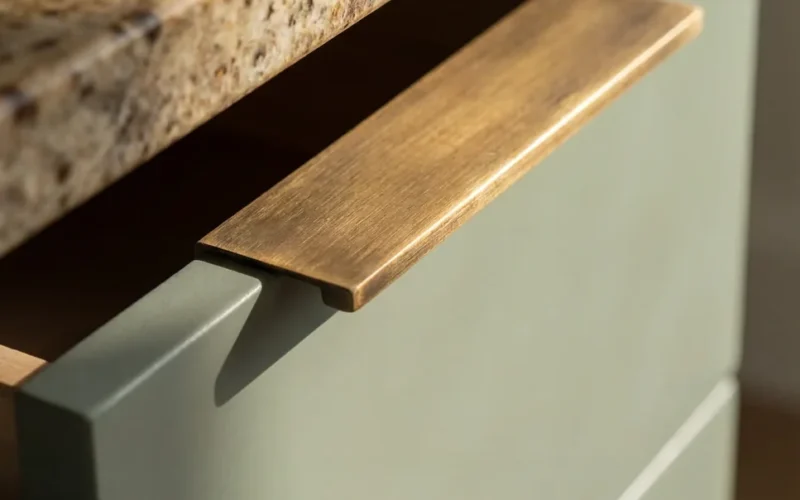
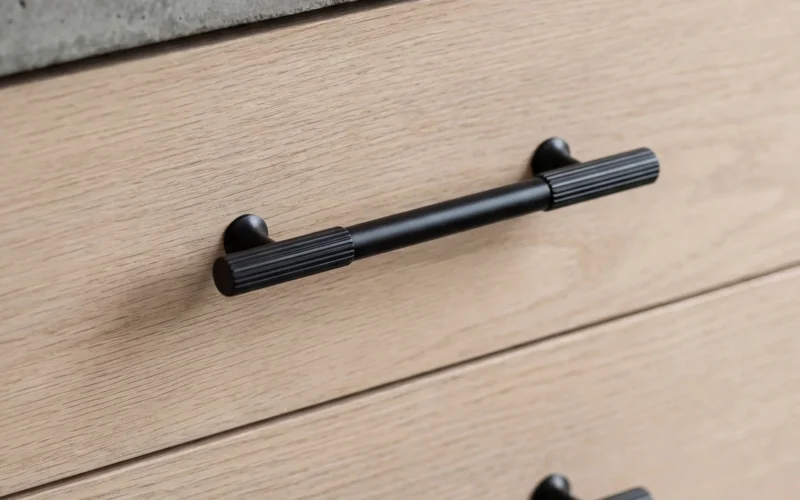
This does not mean brackets must match your handles exactly. But they should feel like they belong in the same family. If your cabinet pulls are satin brass, your shelf brackets should share that warmth. If your handles are matte black, black brackets maintain the consistency.
The relationship between open and closed
Most kitchens combine open shelving with closed cabinetry. The hardware on each should relate but not necessarily match. A common approach: the same finish family across both, with the shelf brackets being simpler and more minimal than the cabinet handles.
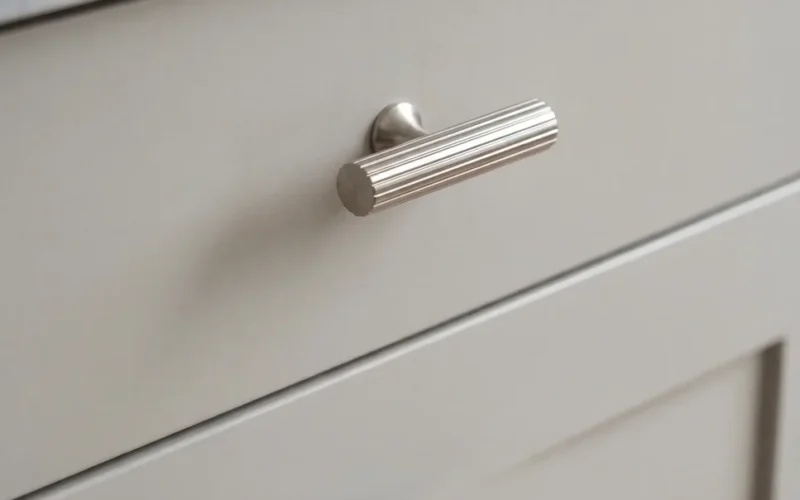
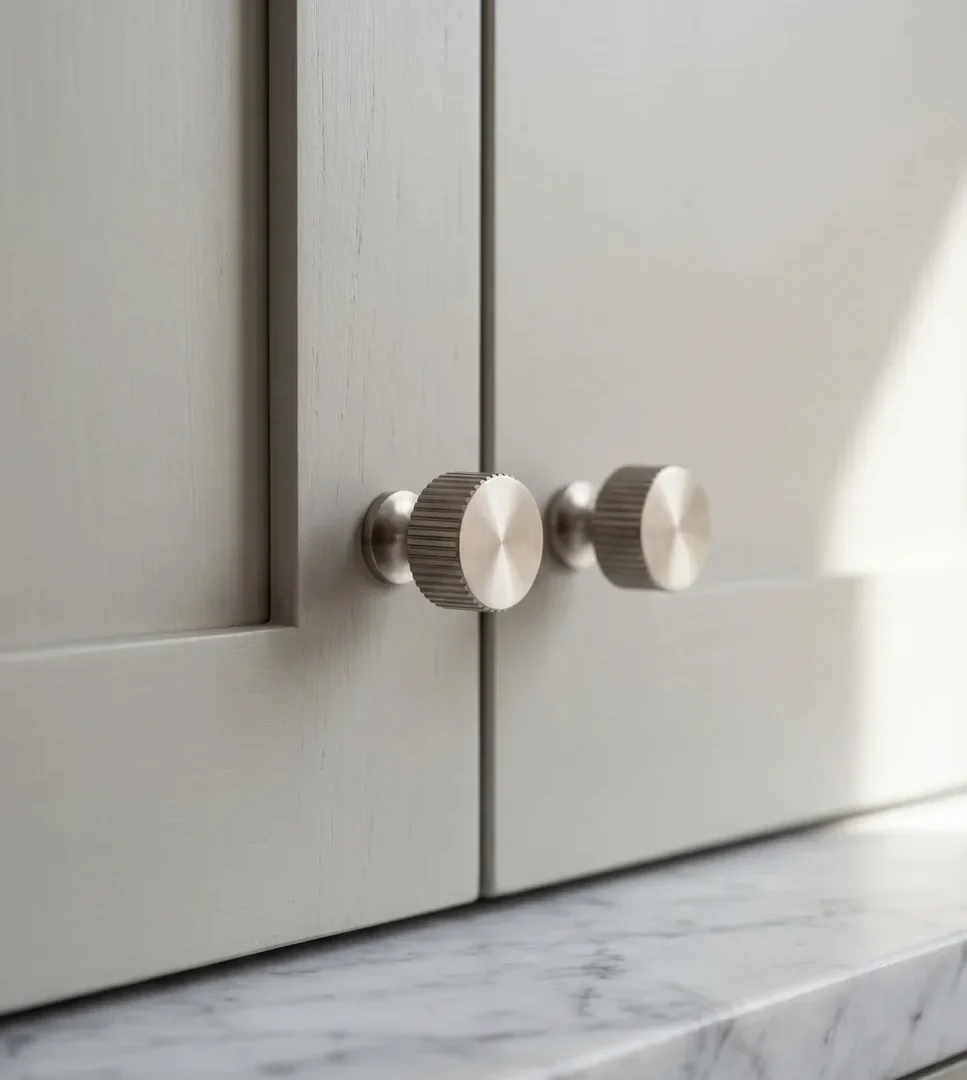
This hierarchy makes sense. Cabinet handles are interactive objects. You grip them, pull them, push them. They benefit from tactile details like knurling or a comfortable radius. Shelf brackets are structural. They should do their job without calling attention to themselves.
Scale and proportion
The depth of your shelving dictates the size of bracket you need. A 200mm deep shelf needs a bracket with at least 180mm of support. Undersized brackets look wrong and, more importantly, risk failure under load.
Thinner brackets create a more delicate look but limit what you can put on the shelf. If you plan to store heavy items, choose a bracket that can handle the weight without flex. Solid brass brackets are heavier than steel equivalents, but their rigidity means they can support more weight per bracket.
What not to do
Do not use ornate or decorative brackets in a kitchen with minimal cabinetry. The contrast will feel jarring. If your kitchen is clean-lined and contemporary, your brackets should be too.
Do not mix bracket finishes with a third metal. If your kitchen already has brass handles and nickel taps, adding a third metal on the brackets introduces too much visual noise. Match the brackets to whichever metal feels most natural in that area of the kitchen.
Do not forget the wall. Brackets are fixed to surfaces, and the quality of your wall finish matters. A beautiful brass bracket on a badly patched wall draws attention to the wrong thing. Prepare the wall properly before fitting.