Every kitchen renovation reaches this question: knobs or pulls? Some people have strong opinions. Most people have no idea. Both are valid starting points.
The answer depends on three things: what you are opening, how you want it to feel, and what looks right in the space.
The functional difference
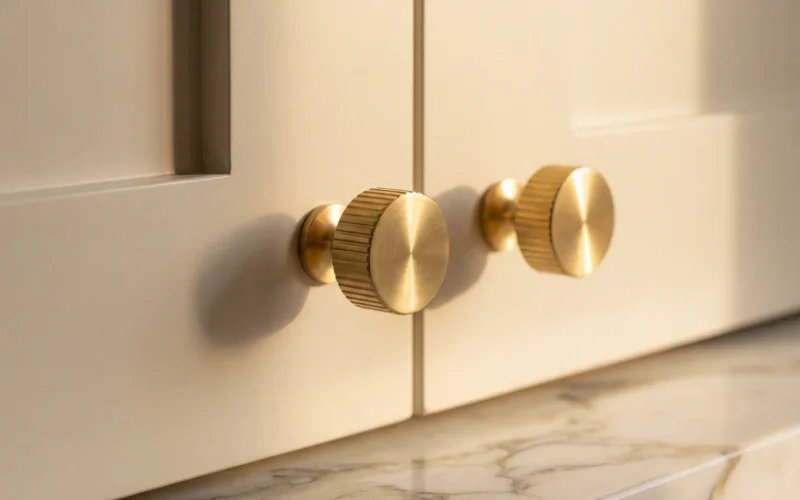
Knobs are gripped between thumb and fingers and turned or pulled. They work well on doors because the motion is a simple pull towards you. They are less comfortable on heavy drawers because you cannot get a full grip.
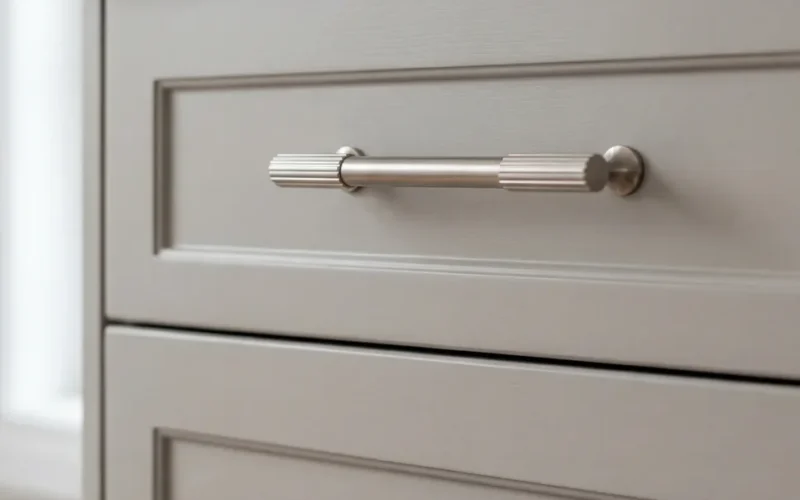
Pulls and handles offer a more secure grip. Your fingers wrap around or under the bar, giving you leverage. For deep, heavy drawers loaded with pots and pans, a pull is more practical than a knob.
A common approach
Knobs on doors, pulls on drawers. This is the default combination in most kitchens, and it works for good reason. Doors are lighter and benefit from the minimal profile of a knob. Drawers are heavier and need the grip of a pull.
This combination also creates visual rhythm. The vertical doors get small, round knobs. The horizontal drawers get linear pulls. The two forms complement each other without competing.
All knobs
An all-knob kitchen has a traditional, understated feel. It works best with lighter drawers on soft-close runners where the full grip of a pull is not necessary. Shaker-style kitchens suit this approach particularly well.
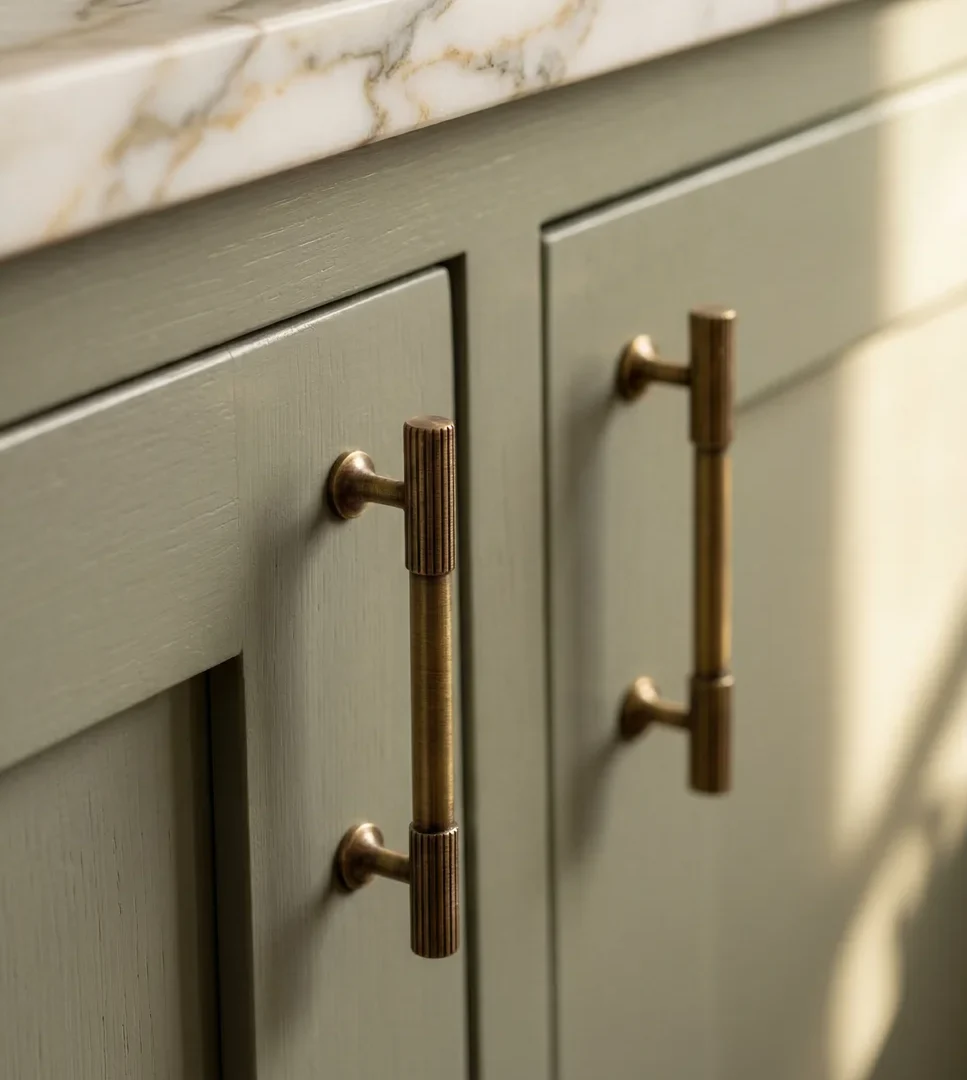
The practical compromise: if you go all-knobs, consider T-bars for the largest drawers where a single knob might feel inadequate.
All pulls
An all-pull kitchen reads as more contemporary. The horizontal lines of pulls reinforce the linear geometry of modern cabinetry. This approach works well in handleless-style kitchens where the hardware is the primary visual detail.
If you go all-pulls, vary the length. Short pulls (96mm CC) for small doors and drawers. Medium pulls (128mm or 160mm) for standard sizes. Long pulls (192mm or 320mm) for wide drawers and integrated appliance panels.
Edge pulls
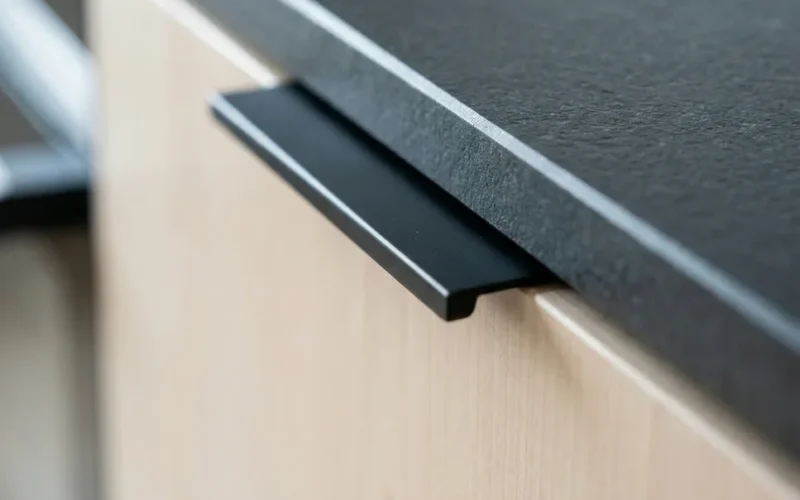
Edge pulls sit on the top edge of a door or drawer and are nearly invisible from the front. They suit minimal, contemporary kitchens where you want the cabinet fronts to read as clean, uninterrupted surfaces.
The trade-off is comfort. Edge pulls require a specific finger motion to open, and some people find them less intuitive than a protruding handle. Try one before committing to a full kitchen.
Mixing within a kitchen
Most successful kitchens mix at least two types of hardware. The combination should feel logical. Knobs on upper cabinets, pulls on base cabinets. T-bars on drawers, edge pulls on integrated appliances. Each type of hardware should correspond to a type of cabinet, creating a system rather than a random selection.
What to avoid: the same type of hardware in multiple sizes on adjacent cabinets, which can look like a mistake rather than a choice.