There is a misconception that brass hardware belongs only in period homes. In reality, brass is one of the most adaptable materials in interior design. Its warmth cuts through the coolness of modern spaces, and its weight gives substance to minimal interiors that might otherwise feel sparse.
Here are five approaches we see working particularly well in contemporary homes.
1. Contrast against dark joinery
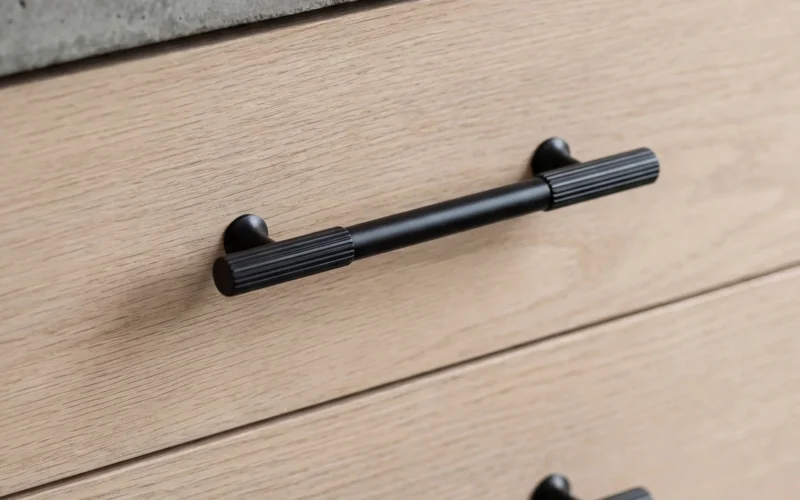
Dark-stained timber, painted charcoal, or deep green cabinetry paired with satin brass hardware is one of the most reliable combinations in modern design. The brass reads as jewellery against the dark surface, drawing attention without overwhelming.
The key is restraint. Let the hardware be the only brass element, or limit it to hardware and one other detail, perhaps a shelf bracket or a towel rail. Too many brass accents and the contrast loses its power.
2. Tone-on-tone with warm neutrals
In kitchens and bathrooms built around warm whites, oatmeals, and light timbers, brass hardware blends rather than contrasts. The effect is quieter but no less considered. Satin brass or matte brass disappears into the palette while still providing a tactile quality that painted or plastic hardware cannot.
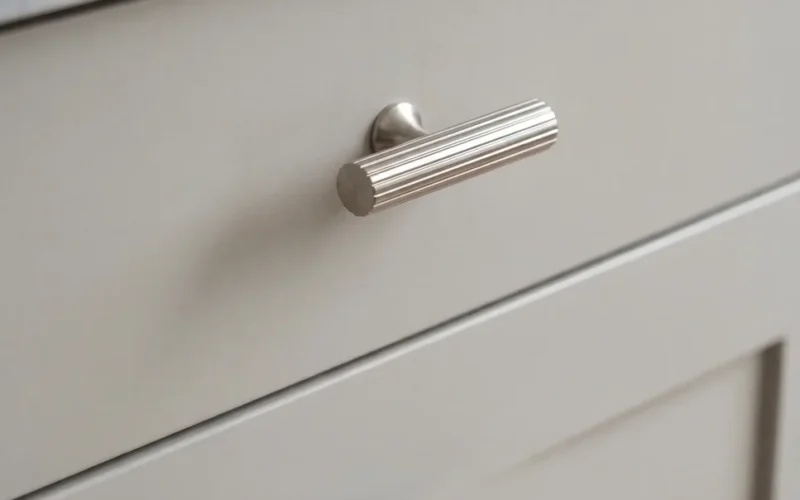
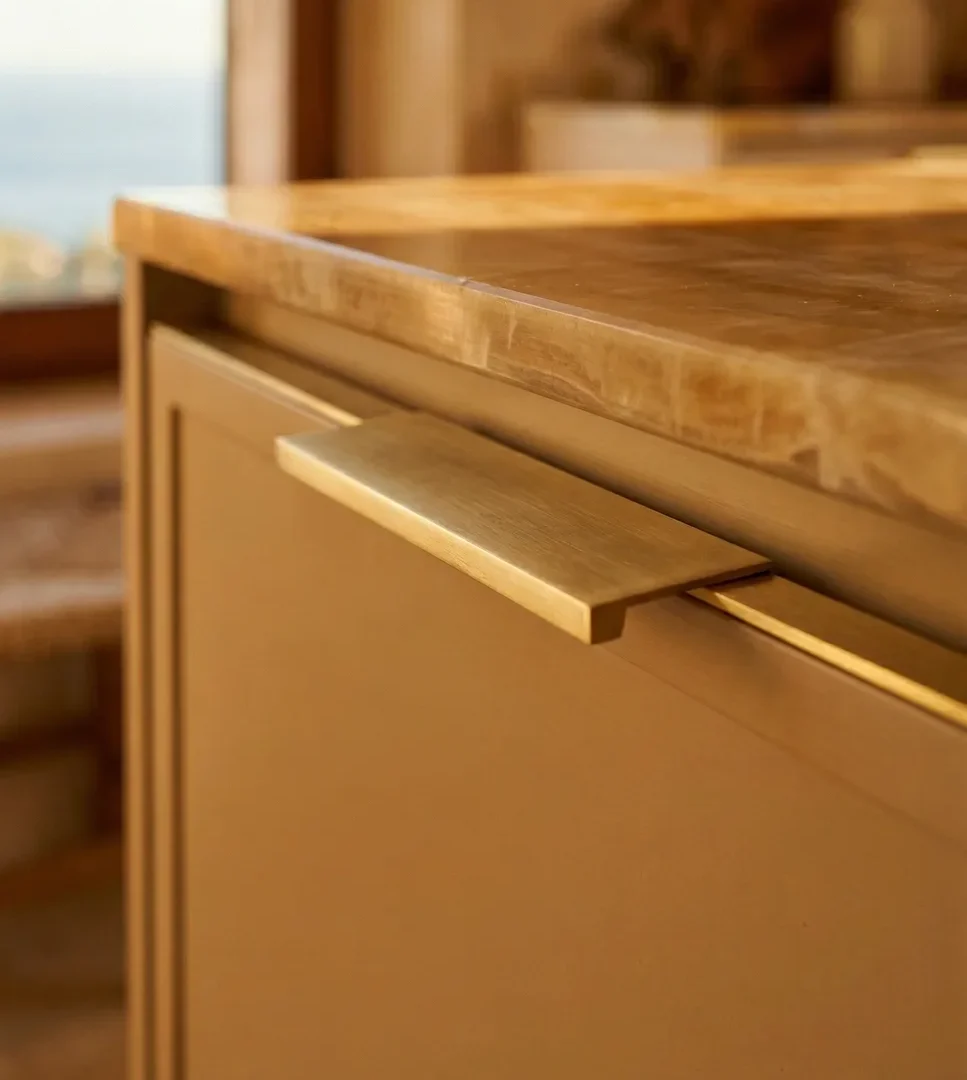
This approach works best with simple shapes. A clean T-bar or a minimal edge pull in a warm finish lets the material speak without the design competing.
3. Mixed metals, done carefully
The old rule of matching all metals in a room has relaxed, but mixing still requires intention. The safest approach is to choose one dominant metal and one accent.
Brass hardware with a chrome tap is perfectly acceptable, provided the brass appears in more than one place. Hardware on the cabinets and brass on a pendant light, for example, creates enough repetition that the mixing feels deliberate rather than accidental.
Mixing metals works when it looks like a decision, not an oversight.
4. Brass as the only decorative element
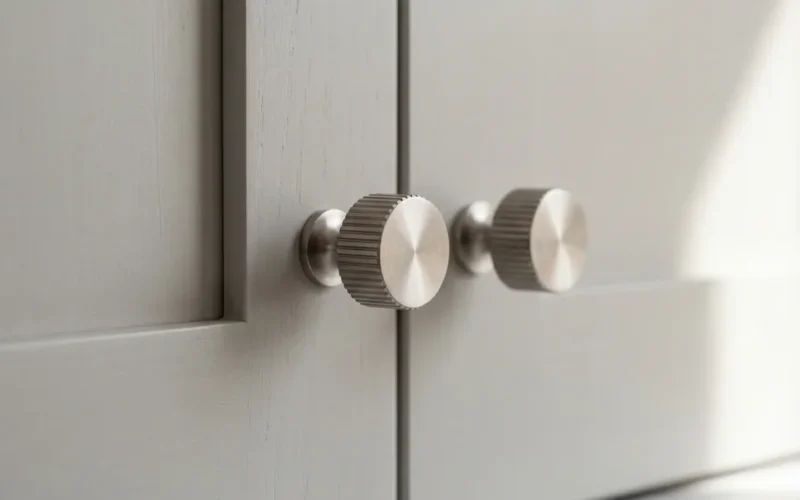
In truly minimal interiors, where surfaces are flat, colours are muted, and decoration is almost absent, hardware becomes the design. A row of reeded brass knobs across a bank of handleless drawers transforms the entire face of a kitchen.
This is where quality becomes visible. In a sparse room, every detail is magnified. The weight of the knob, the precision of the reeding, the depth of the finish. There is nothing else to distract from it.
5. Unlacquered brass in lived-in spaces
Not every home aspires to look finished. Some of the most compelling contemporary interiors embrace imperfection, mixing reclaimed materials with clean lines, or pairing industrial textures with soft furnishings.
Unlacquered brass fits this aesthetic naturally. As it patinas, it develops a character that no factory finish can replicate. In a kitchen that celebrates use rather than hiding it, unlacquered hardware becomes more beautiful over time, not less.
The thread connecting all five approaches is intentionality. Brass hardware works in modern homes not because it is inherently contemporary but because, when placed with care, it brings warmth and substance that synthetic materials cannot match.