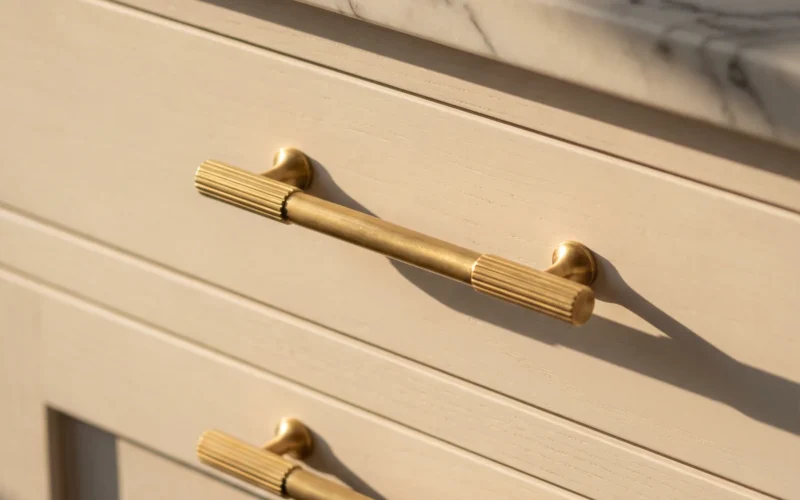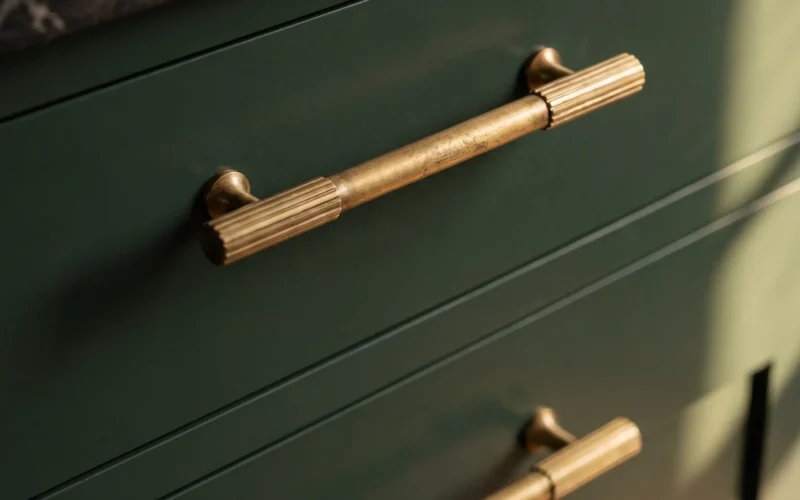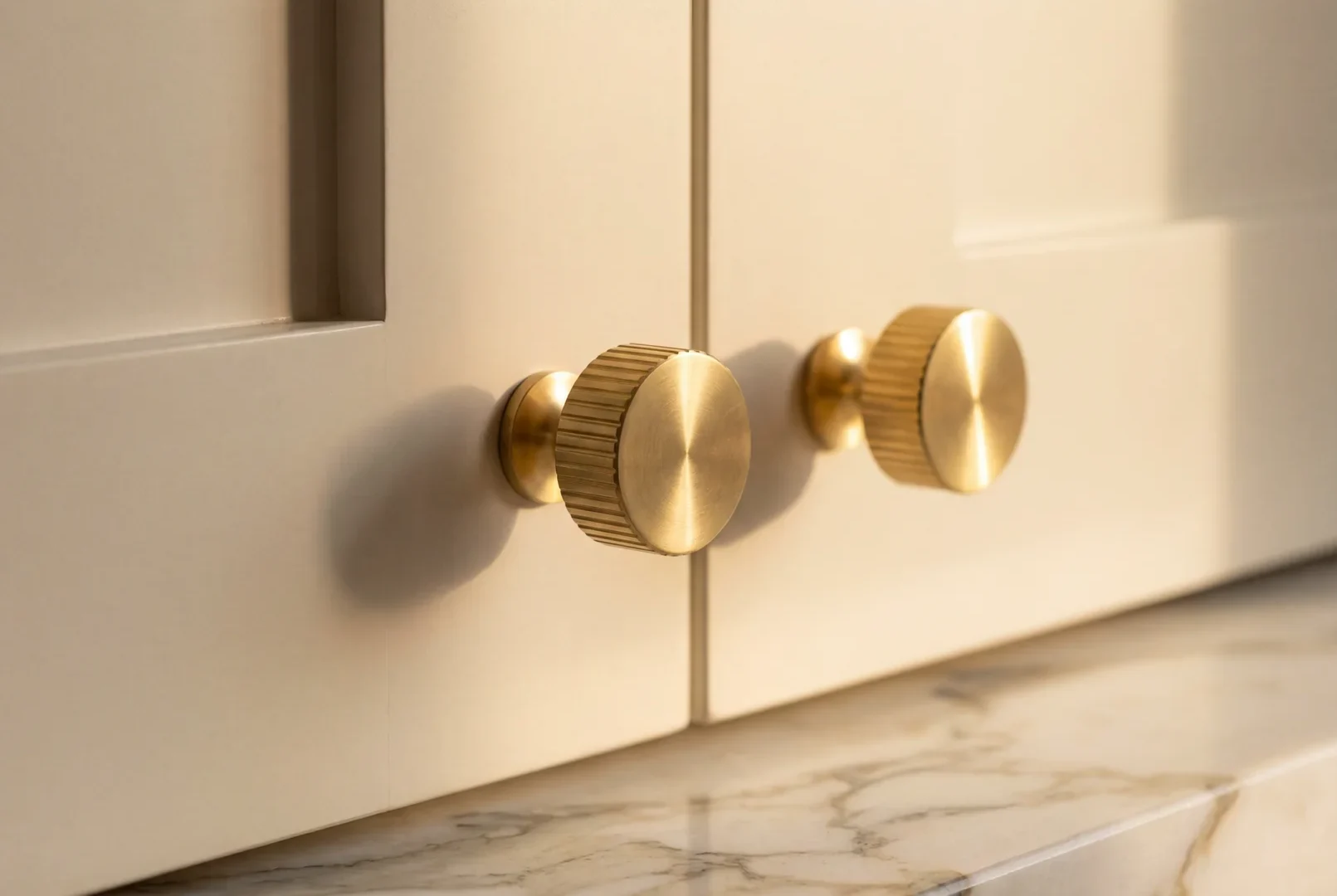
One of the advantages of solid brass hardware is how little it asks of you. Unlike plated finishes that degrade over time, solid brass simply changes character. But a few simple habits will keep your hardware looking intentional rather than neglected.
Daily care
Wipe your hardware with a soft, damp cloth when you clean your kitchen surfaces. That is it. No special products. No polishing. Just remove cooking residue, fingerprints, and splashes before they build up.
Avoid abrasive cloths, scouring pads, or cream cleaners. These will scratch the surface finish and remove the protective lacquer on lacquered pieces.
Lacquered vs unlacquered finishes
Most brass hardware ships with a clear lacquer coating. This lacquer protects the surface from oxidation and fingerprints. It keeps the finish looking consistent over time.
Lacquered brass requires almost no maintenance. Clean with a damp cloth, dry with a soft cloth, and the finish will remain unchanged for years.
Unlacquered brass is a different proposition. Without lacquer, the brass is exposed to air and will develop a patina over weeks and months. This is intentional. The patina is part of the appeal. If you want your unlacquered brass to age naturally, simply leave it alone and let time and use do their work.
If you want to restore the shine
Occasionally you might want to restore unlacquered brass to its original brightness. Use a quality brass polish and a soft cloth. Apply the polish in small circles, let it dry to a haze, then buff off with a clean cloth.
Do not polish lacquered brass. The polish will strip the lacquer and leave you with uneven patches. If lacquered brass needs refreshing, remove all the lacquer first (with acetone or a lacquer stripper), polish the bare brass, and then either re-lacquer or leave it unlacquered.
What causes problems
Acidic substances. Lemon juice, vinegar, tomato sauce. These will etch brass if left in contact for extended periods. Wipe them off promptly.
Harsh chemicals. Bleach, ammonia-based cleaners, and oven cleaners will damage both lacquer and bare brass. Keep these away from your hardware.
Excessive moisture. Hardware near sinks and dishwashers is exposed to more moisture and will patina faster. This is normal and not a defect. If you want to slow the process, dry the hardware after splashes.
The long view
Solid brass hardware is designed to last decades. A piece that is thirty years old will look different from the day it was installed, but it will still function perfectly and look beautiful in a way that only natural materials can.
The best care routine is the simplest one: wipe it when you clean, do not use harsh chemicals, and let the material do what it does naturally.